
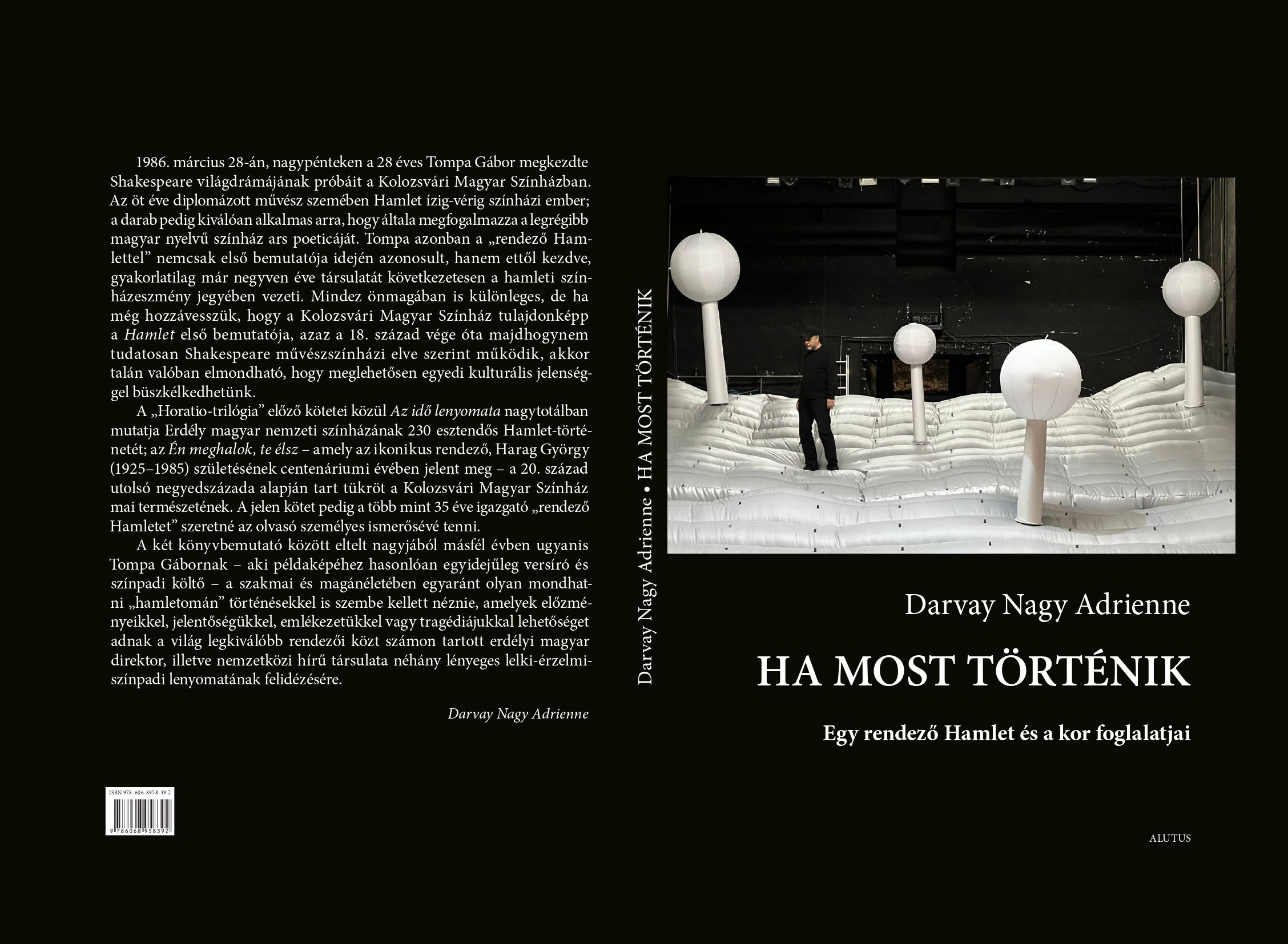
On Good Friday, March 28th, 1986, the 28-year-old Gábor Tompa started the rehearsals of Shakespeare’s world-drama at the Hungarian Theatre of Cluj (Romania). According to the artist, a five-year alumnus at that time, Hamlet was a real ”theatre-man”; the play itself being perfectly suited to articulate the “ars poetica” of the oldest Hungarian-language theatre. However, Tompa identified himself with the “stage-director Hamlet” not only during his first staging of the play but he has been ceaselessly doing so for the past forty years, running even his company under the aegis of Hamlet’s ideal of the theatre. One of a kind in itself. However, should we add that the Hungarian Theatre in Cluj (Kolozsvár – Klausenburg – Claudiopolis) has almost consciously been operating according to the Shakespearean artistic principles since the first-night of the Hungarian Hamlet performance in 1793, we would then have every reason to proudly boast about a rather unique cultural phenomenon.
Among the previous volumes of my so-called “Horatio books”, ’The Pressure of the Time’ (Az idő lenyomata) presents the Hamlet-story of the 230-year-old Hungarian National Theatre of Transylvania in its entirety; while ’I Am Dead Thou Livest’ (Én meghalok, te élsz) – published in the centenary year of the legendary director, György Harag’s birth – mirrors the current nature of the oldest Hungarian theatre by encompassing the last quarter of the 20th century. The new volume aims to turn the “stage-director Hamlet”, also the managing director of the Hungarian State Theatre in Cluj for over 35 years, into a personal acquaintance to the reader.
During the one-and-a-half-year timespan between the two previous book-launches, Gábor Tompa – who, alike his Shakespearean model, is a theatre artist and also a poet – had to face “Hamletish” happenings in both, his professional and private life, of which precedents, importance, memory or tragedy provide an opportunity to recall some of the significant spiritual, emotional and stagely reflections verged not only on the Transylvanian Hungarian director who is regarded as one of the world’s most outstanding theatre-creators, but on his internationally celebrated company, as well.
Adrienne Darvay Nagy